Renewable Energy
As the global energy landscape accelerates its transition towards cleaner and lower-carbon solutions, the new energy sector is undergoing unprecedented scaling and technological iteration. Every step of the process—from ensuring the high efficiency and stability of wind and solar power generation, to guaranteeing the safety and longevity of energy storage systems, and achieving breakthroughs in emerging fields like hydrogen energy—places extreme demands on material performance and process reliability. Within this transformation, adhesive technology has evolved beyond its traditional bonding function to become a core enabler that ensures equipment durability, enhances energy efficiency, and facilitates innovative design.
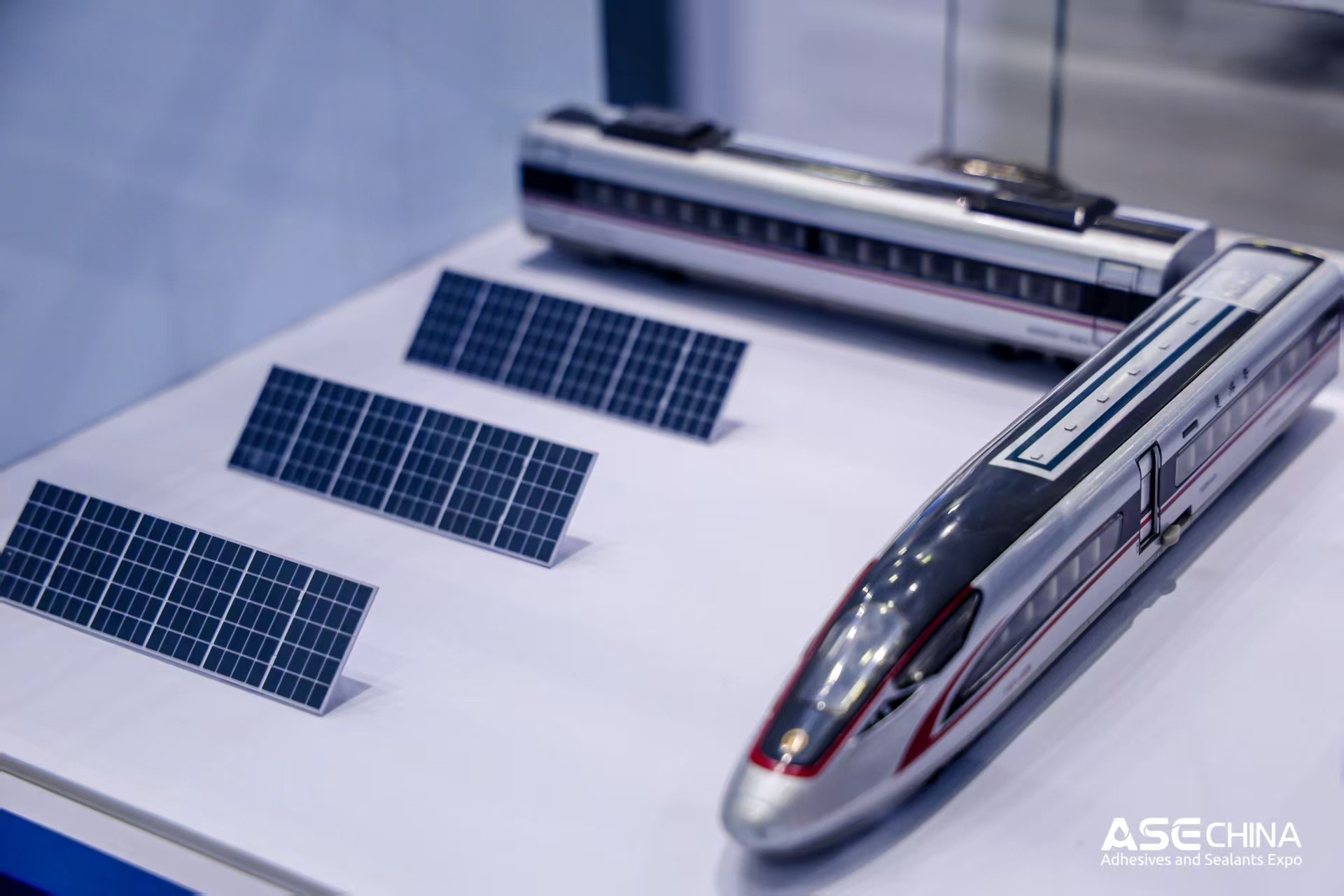
In the new energy sector, adhesive applications span the entire industrial chain. In photovoltaic modules, encapsulation and sealing directly impact power generation efficiency and long-term weatherability. The composite bonding and protection of wind turbine blades influence structural integrity and operational lifespan. For energy storage battery modules, adhesive bonding for fixation, thermal management, and sealing are critical to safety and performance. Furthermore, within the hydrogen energy value chain, the reliable bonding and sealing of electrolyzers, fuel cell stacks, and hydrogen storage tanks form the technical foundation for stable system operation.
Addressing the continuously evolving technical demands and harsh application environments, the Adhesives Expo is committed to serving as a convergence point for innovative materials and a catalyst for solutions within the new energy industry. We focus on adhesive technologies characterized by high weatherability, superior thermal conductivity, lightweighting, extended service life, and sustainability. By connecting leading global material suppliers, equipment manufacturers, and research institutions, we collectively showcase how bonding innovations can withstand extreme conditions, improve production efficiency, extend system lifespan, and contribute to cost reduction, efficiency gains, and reliable operation across the entire new energy value chain.